
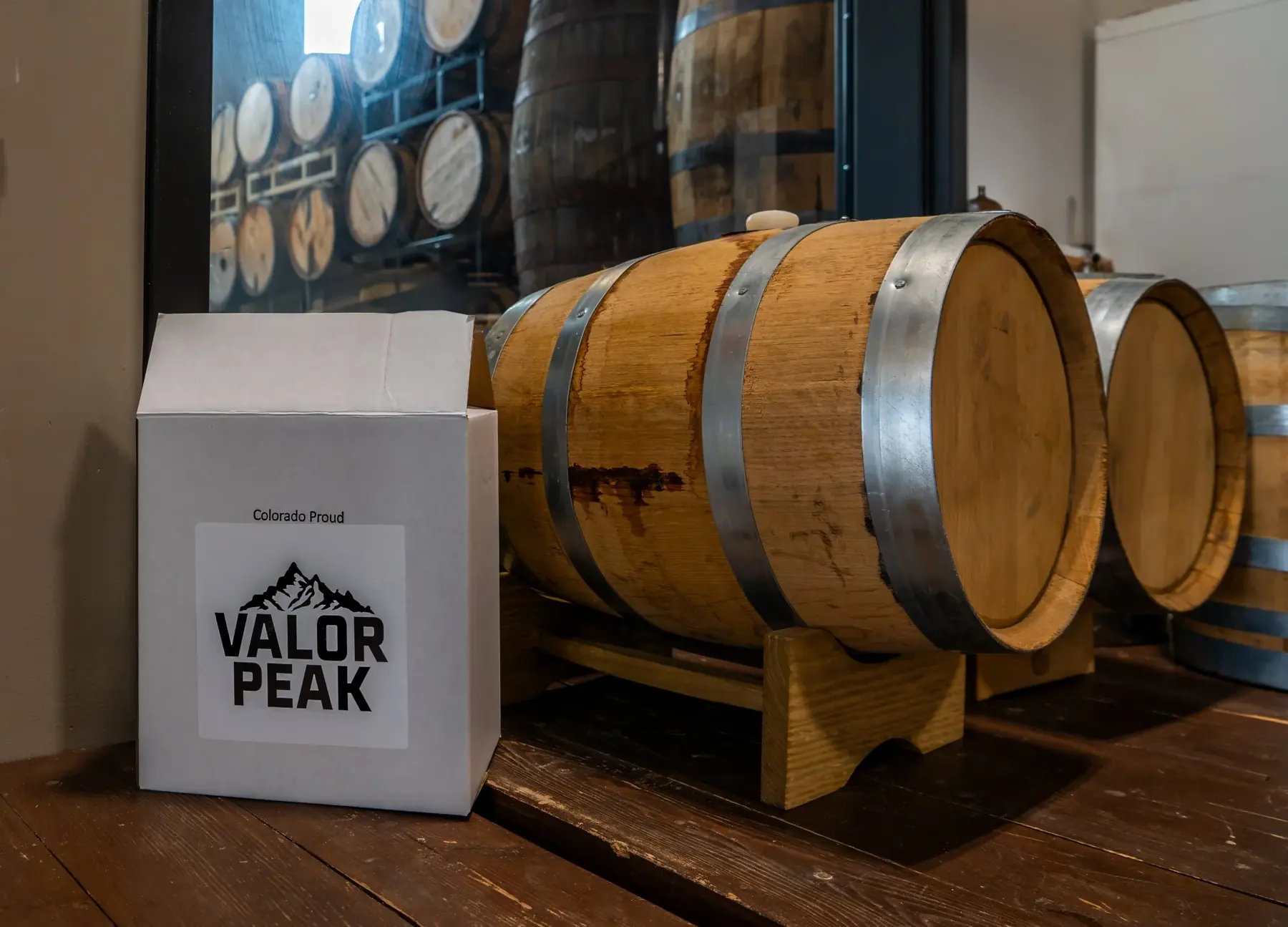
By the Valor Peak crew
Longmont, Colorado
What makes a whiskey a bourbon?
Bourbon has a federal standard of identity, and every bottle labeled bourbon has to meet it. It must be made in the United States from a fermented mash of at least 51 percent corn. It must be distilled to no more than 160 proof, entered into the barrel at no more than 125 proof, and aged in new charred oak containers. It has to be bottled at 80 proof or more.
Those rules are the floor, not the whole story. Inside them, a distiller still chooses the rest of the grain recipe, the yeast, how the still is run, which barrels to use and how long to wait. That is why two bourbons that meet the same rules can taste nothing alike. The grain recipe, called the mash bill, is one of the biggest choices of all.
What does "wheated" mean in bourbon?
Most bourbon mash bills use three grains. Corn is the base and brings sweetness. Malted barley helps convert starch into sugar during mashing. The third grain is the flavoring grain, and for most bourbons that grain is rye. In a wheated bourbon, wheat takes the place of rye.
Wheated does not mean the whiskey is mostly wheat. Corn is still the majority, as the law requires. Wheat simply steps into the supporting role. There is no legal minimum for how much wheat a wheated bourbon has to contain, so the word describes the recipe style rather than a fixed formula. If you want the details for a specific bottle, ask the people who made it.
How does wheated bourbon taste compared with high-rye bourbon?
Rye tends to add spice, pepper and a drier, sharper edge. Wheat tends to do the opposite. Wheated bourbons are often described as softer and rounder, with more bread, honey and caramel sweetness and less bite on the finish. Many people find them gentle on the palate, which is why they are often recommended to new bourbon drinkers.
High-rye bourbons lean bold and spicy, and they shine when you want a cocktail with backbone. Neither style is better. They are simply different tools. The barrel, the age and the proof still shape the final glass, so treat these as general tendencies, not promises. The best way to learn the difference is to taste one of each side by side.
How should you drink wheated bourbon?
Start neat, in a small glass, with a short pause before the first sip so the aroma can open up. Then add a few drops of water and taste again. A splash of water often softens the alcohol and lets sweeter notes come forward. Ice is fine too, though it will mute some aroma as the glass chills.
Wheated bourbon also makes a smooth Old Fashioned. The softer grain lets the sugar and bitters sit in balance without a sharp spice note on top. If you like a bolder, spicier Old Fashioned, a high-rye bourbon may suit you better. Our bar is happy to pour the same cocktail both ways so you can choose for yourself. Browse our menu for the full cocktail list.
“One grain can change the whole conversation in the glass.”
How do you read a bourbon label?
Look for the category first. The word bourbon means the federal rules above were met. Straight bourbon means the whiskey was aged at least two years, and a straight bourbon aged less than four years must state its age on the label. Bottled in bond is a separate, stricter term with its own requirements.
Next, look at who made it. Phrases like distilled by tell you who ran the stills. Bottled by or produced by can mean the spirit was made somewhere else. Wheated is usually mentioned on the label or by the producer, because the law does not require it. When a label leaves you guessing, ask. A good producer will tell you what is in the bottle.
What is Wheated Bourbon #44?
Wheated Bourbon #44 is the current release in our Grain to Glass series. Grain to Glass is how we tell the story of the steps carried out in our Longmont distillery, from grain and mash through fermentation, the still and the barrel. Each release in the series gets its own number.
Expect the soft, sweet and round character that wheated bourbon is known for. We keep the specifics for the crew to share in person, so if you want to talk mash and barrels, ask at the bar. If you are new to the style, compare it with our flagship Valor Peak Bourbon, a low rye bourbon, for a simple lesson in what one grain can change.
Where can you buy wheated bourbon in Colorado?
Wheated Bourbon #44 is poured and sold at our tasting room in Longmont, and you can check the online shop for bottles. Some Colorado liquor stores carry Grain to Glass releases, so call ahead. Selection varies from shop to shop and limited releases move quickly.
Use our Where to Buy finder to see the 43 Colorado shops that stock Valor Peak, then call ahead before you drive. If you want to taste before you buy, plan a visit. A tour ends with a tasting, and the crew can pour #44 next to our other whiskeys so you can find the style you like best.
What else should you know?
Is wheated bourbon sweeter?
Usually, yes. Wheat replaces rye as the flavoring grain, so there is less spice and more room for soft, sweet notes like caramel, honey and bread. The barrel and proof still matter, so taste before you decide.
What is the difference between wheated and high-rye bourbon?
Both are at least 51 percent corn. A high-rye bourbon uses a generous share of rye as its flavoring grain for spice and bite. A wheated bourbon uses wheat instead, which tends to taste softer and rounder.
Is wheated bourbon good for an Old Fashioned?
Yes. Wheated bourbon makes a smooth, rounded Old Fashioned where the sugar and bitters stay in balance. If you prefer more spice in the glass, try a high-rye bourbon, or ask our bar to pour both.
Where can I buy wheated bourbon in Colorado?
Valor Peak Wheated Bourbon #44 is sold at our Longmont tasting room and through our online shop. Some Colorado liquor stores carry Grain to Glass releases, so call ahead. The Where To Buy finder lists every retailer.